re-iconic surveillance
academic
course
location
type
date
team
iaac, master in advanced architecture
urban panopticons
barcelona, spain
digital and physical intervention
spring 2020
taras kashko
michelle rodriguez
mission brief
How are the dynamics generated around iconic buildings and popular spaces affected by the crisis?
We want to analyze the current situation of popular locations that were very crowded before COVID-19 and based on this, establish conclusions on how these spaces may lose their functionality in the city.
With these conclusions, the design intent is to create urban landscapes near iconic buildings based on data related to pedestrian movement.
re-iconicize the unnoticed

after covid
before covid
analysis

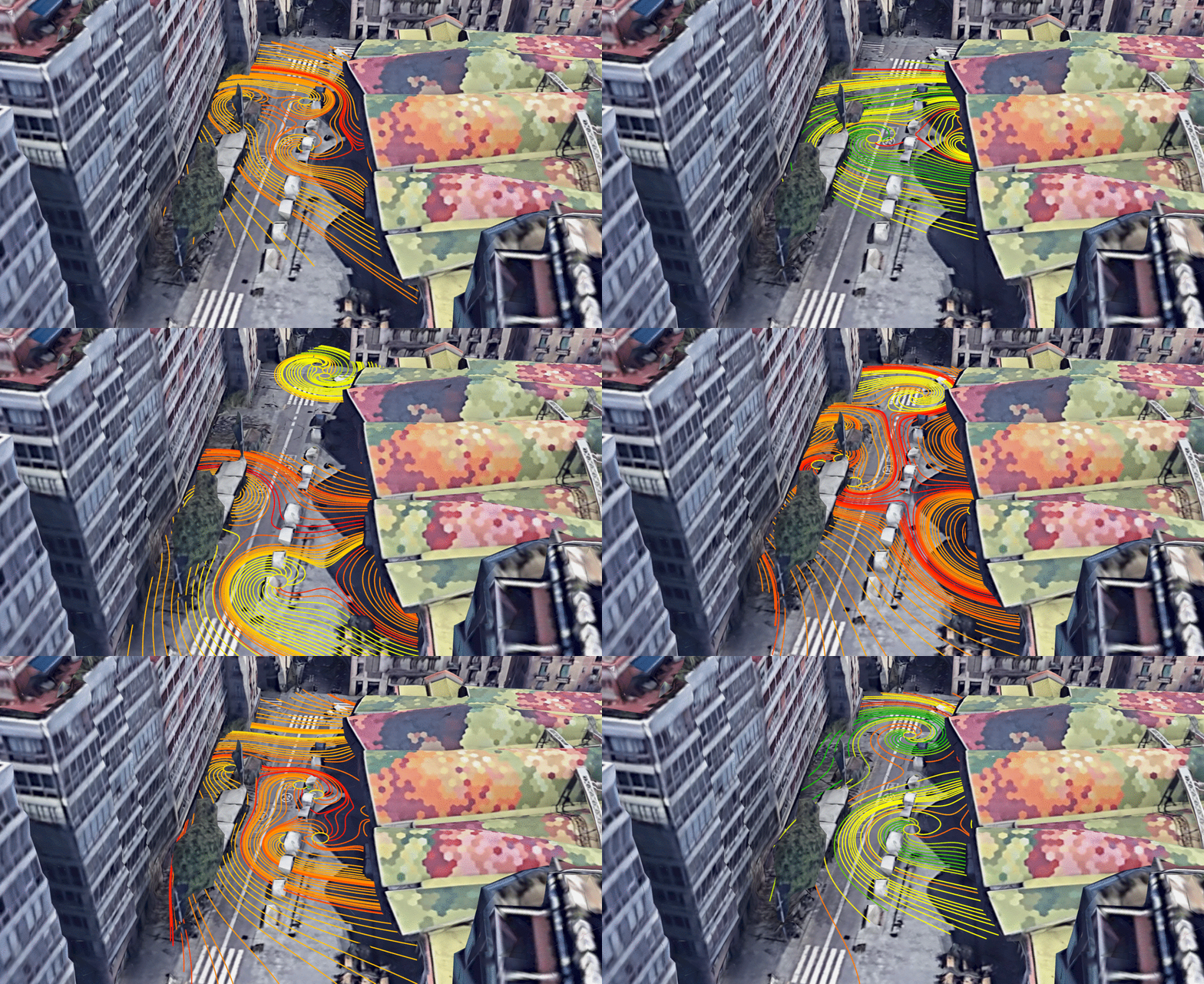
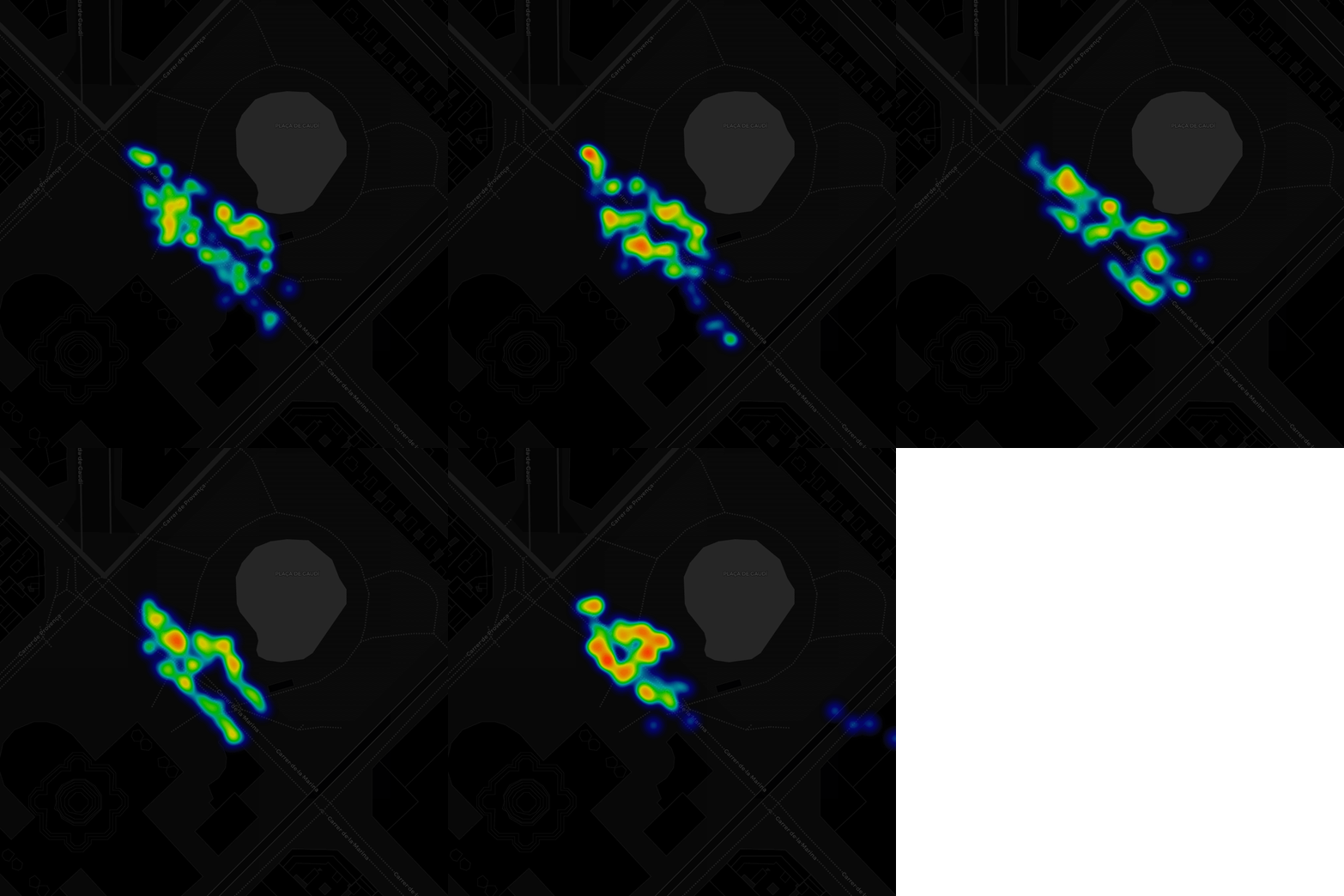
Many buildings are unnoticed and regarded simply as just a backdrop to the locals. Tourism has halted because of the lockdown, and thus the remaining populous are citizens of Barcelona.
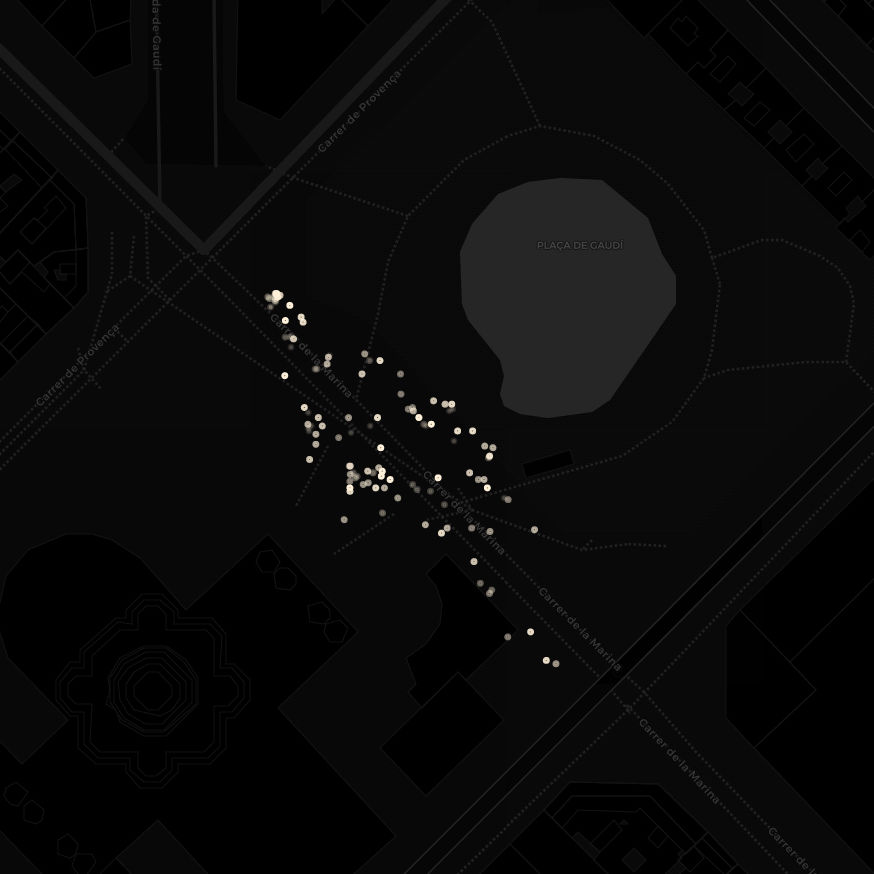
Sagrada Familia is a building of admiration (sculpture), after quarantine it has become a barren urban meeting location.
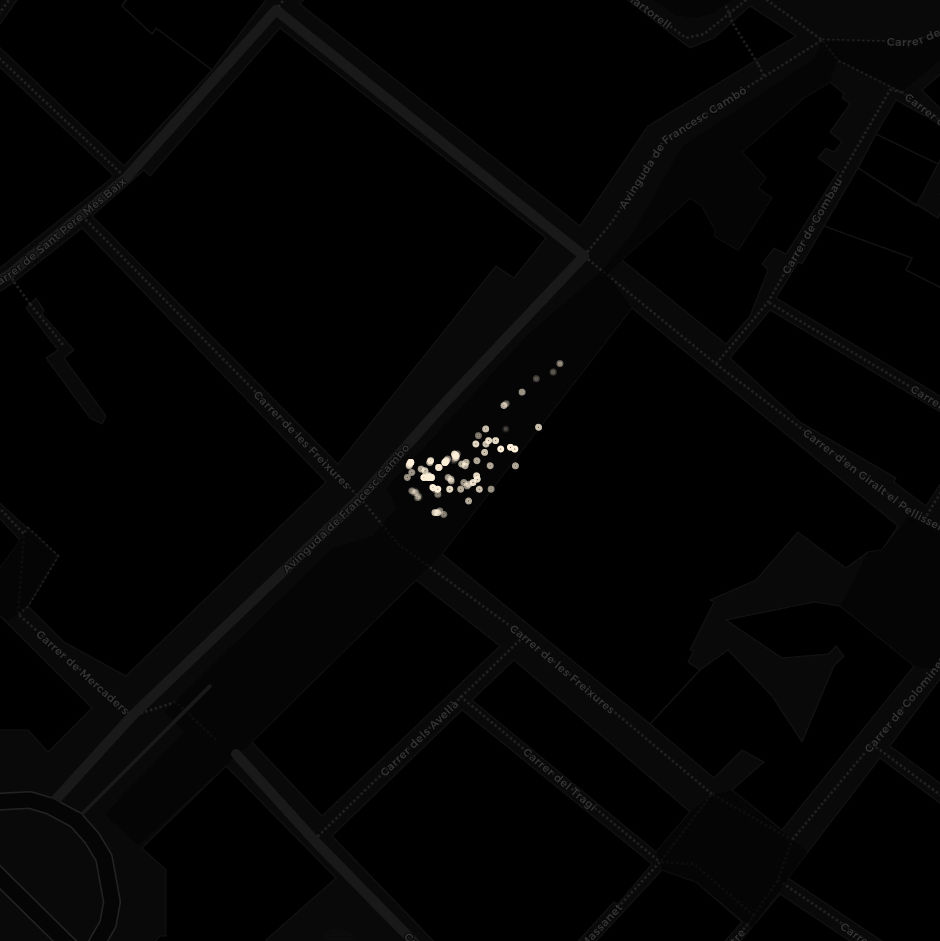
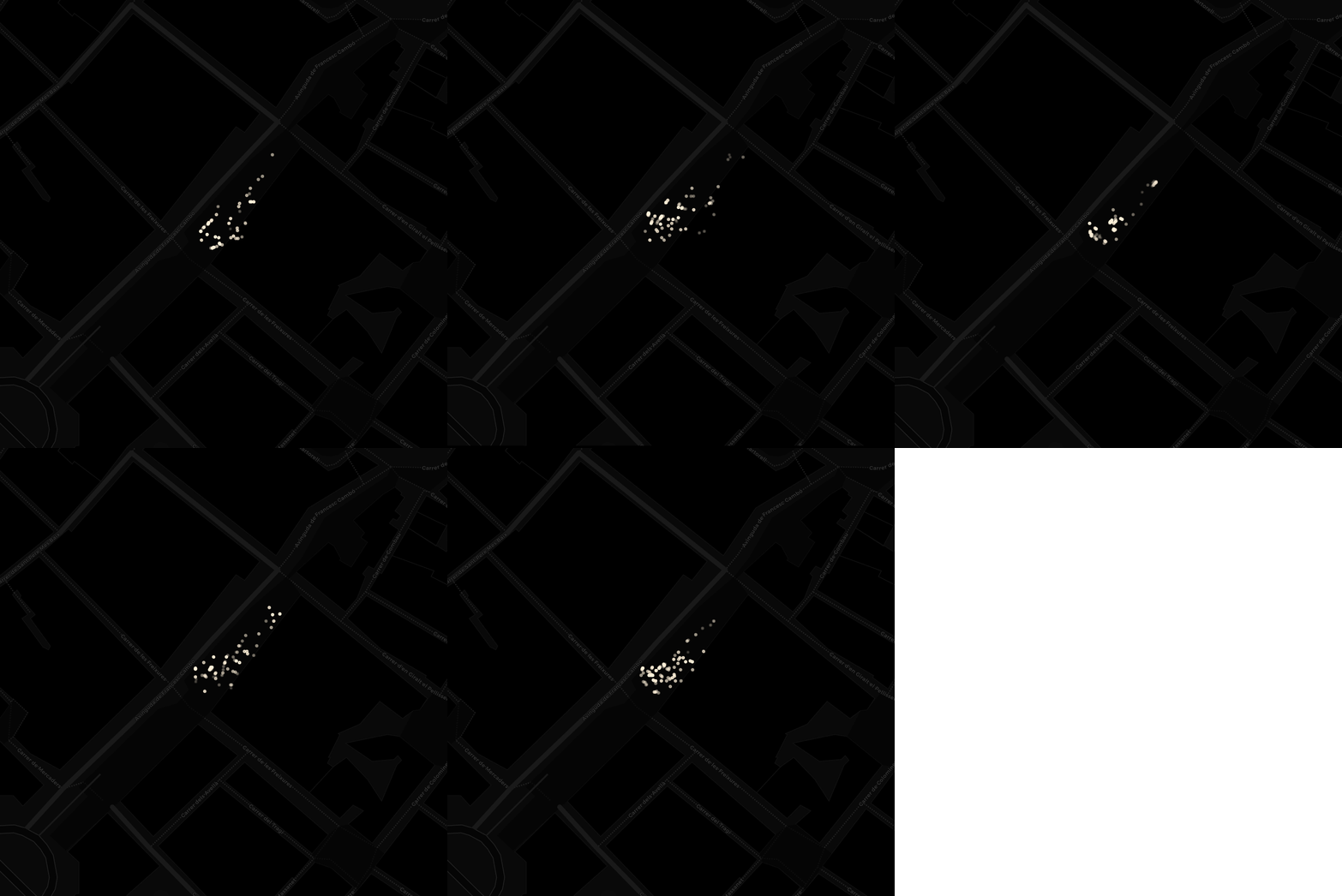
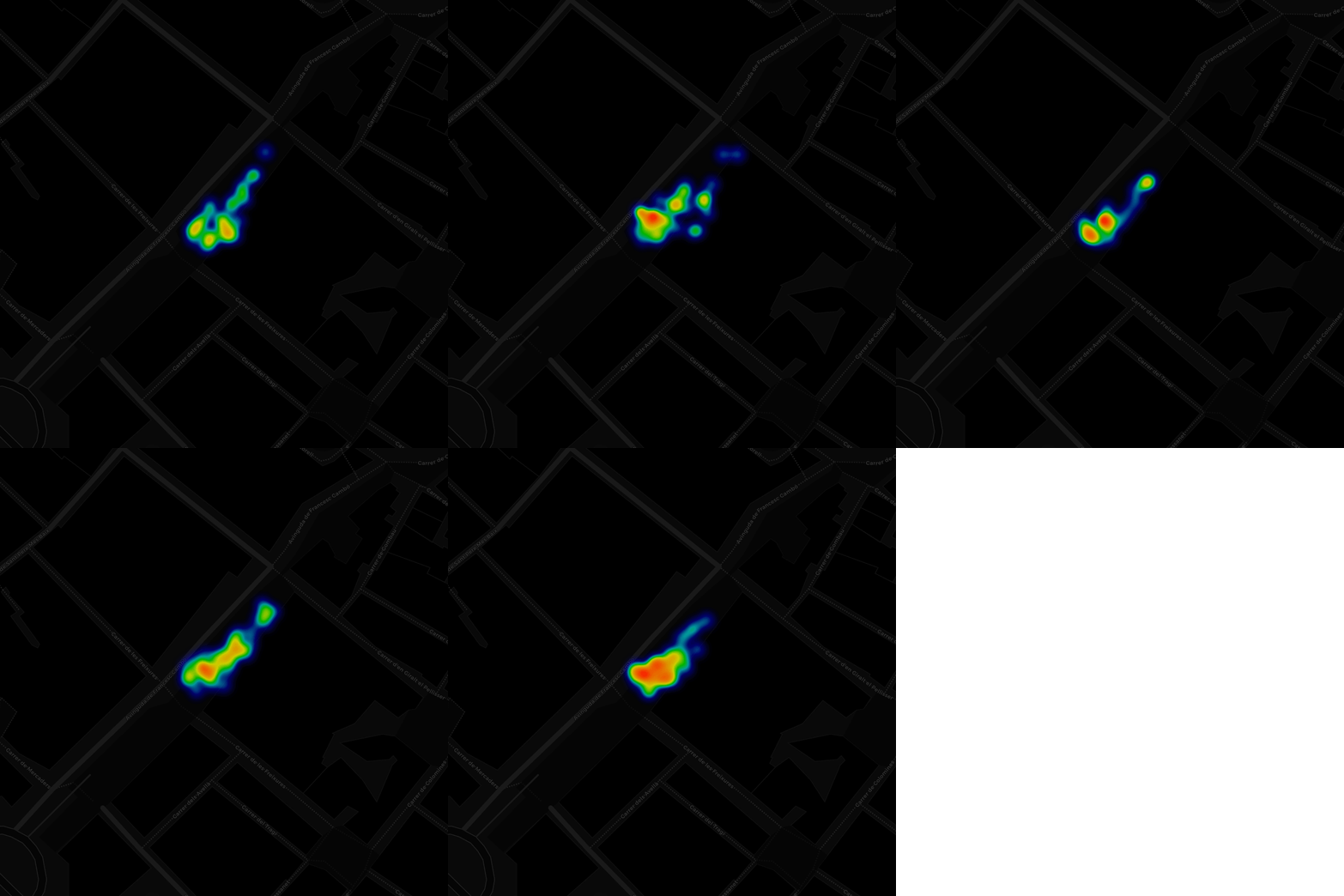
Santa Caterina is attractive for tourist and functional interest, but the surrounding space offers little comfortability.

objective
phase 1
phase 2
_Page_27.jpg)
How can we begin to change the way the citizens of Barcelona interact with these buildings? We can start by asking what type of information we need to extract.
locations
mercat de santa caterina_location
sagrada familia_location
phase 1
la sagrada familia
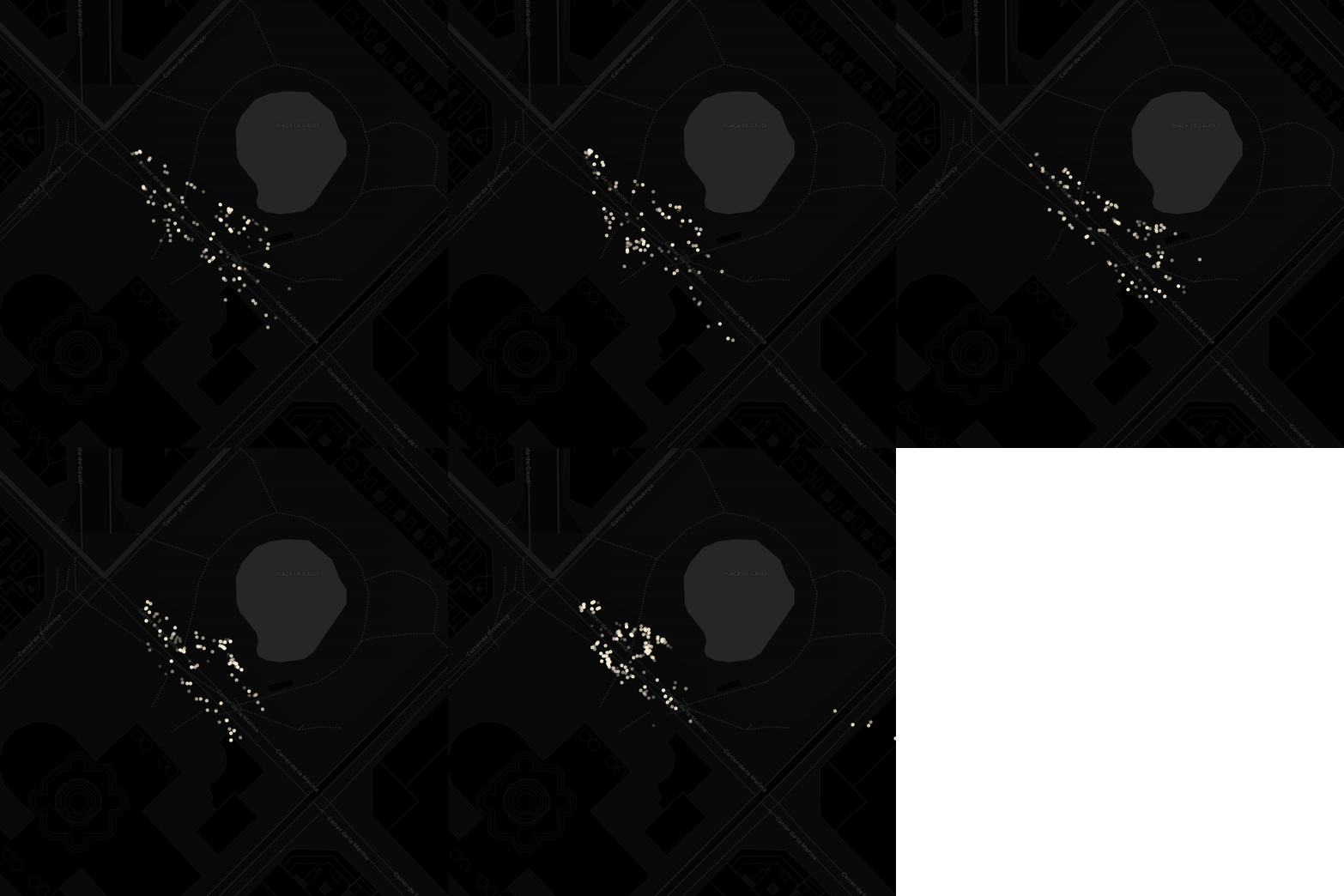
sagrada familia_morning


time (am to pm)


time (am to pm)
sagrada familia_evening
composite_dotmap
composite_heatmap
mercat de santa caterina
mercat de santa caterina_morning


time (am to pm)


time (am to pm)
mercat de santa caterina_evening
composite_dotmap
composite_heatmap
phase 2
How can we design regarding the current situation we are all facing? And how can we redefine the urban landscape to reconnect the locals of Barcelona to the iconic buildings?


White Circles, Employees of Domino Park, 2020
Here Comes the Sun blanket, Paul Cocksedge, 2020
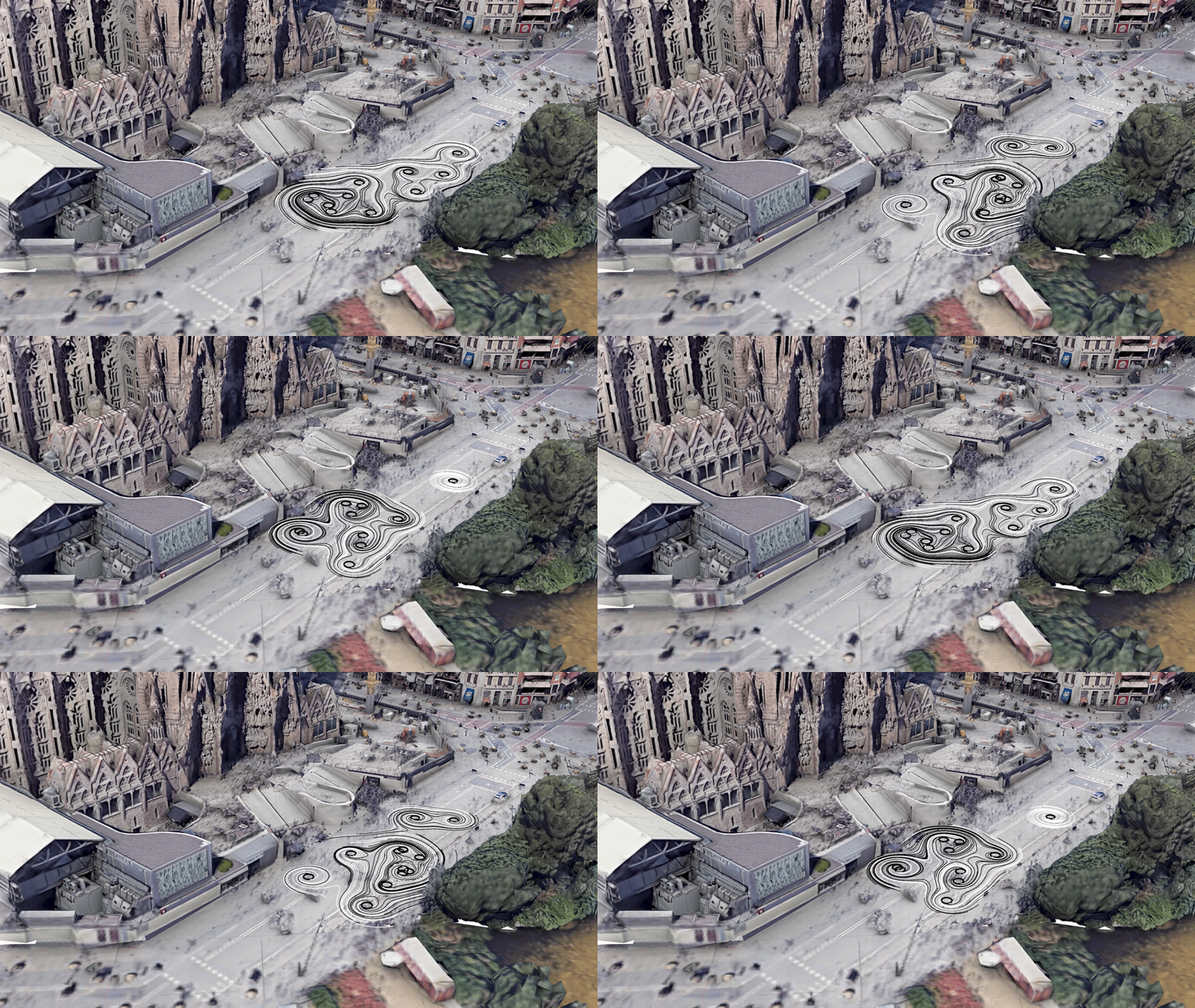
The ends of the magnet are called its poles. One end is called the north pole, the other is called the south pole. If you line the magnets up so that two of the same poles face each other, the magnets will push ways. This is called repulsion.

urban typology_activity zones
urban typology_pedestrian paths
urban typology_resting spots


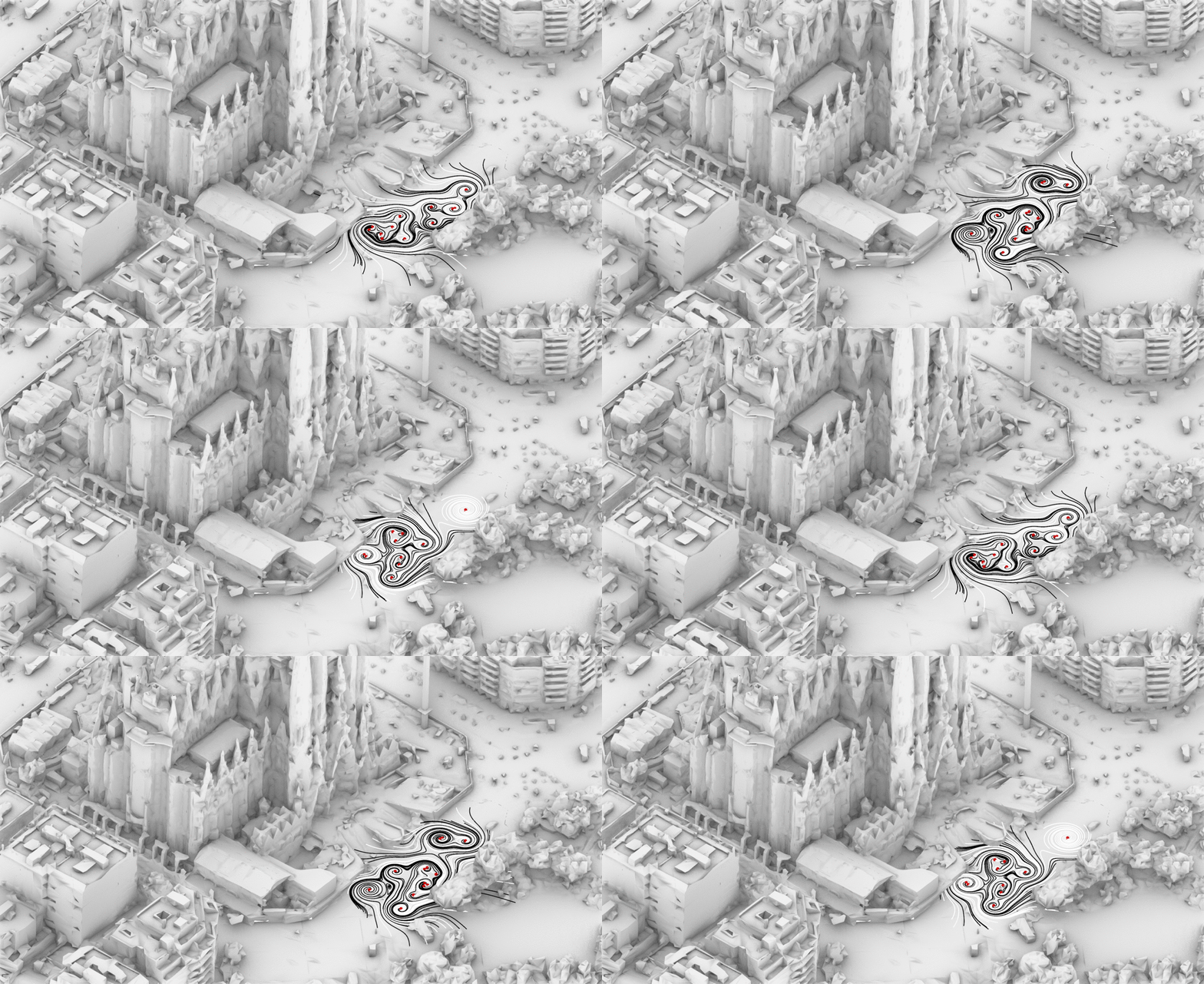
sagrada familia_magnetic map


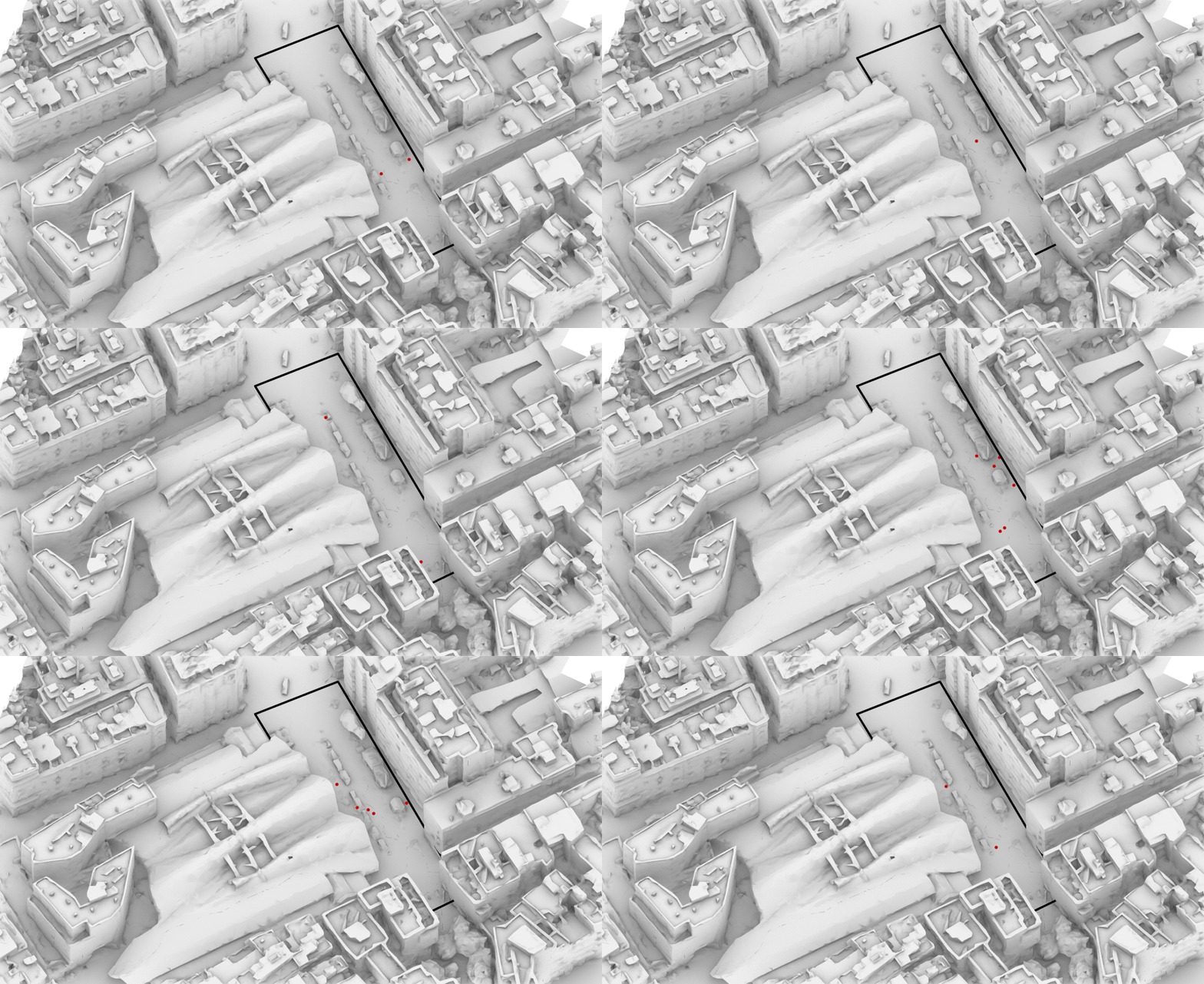
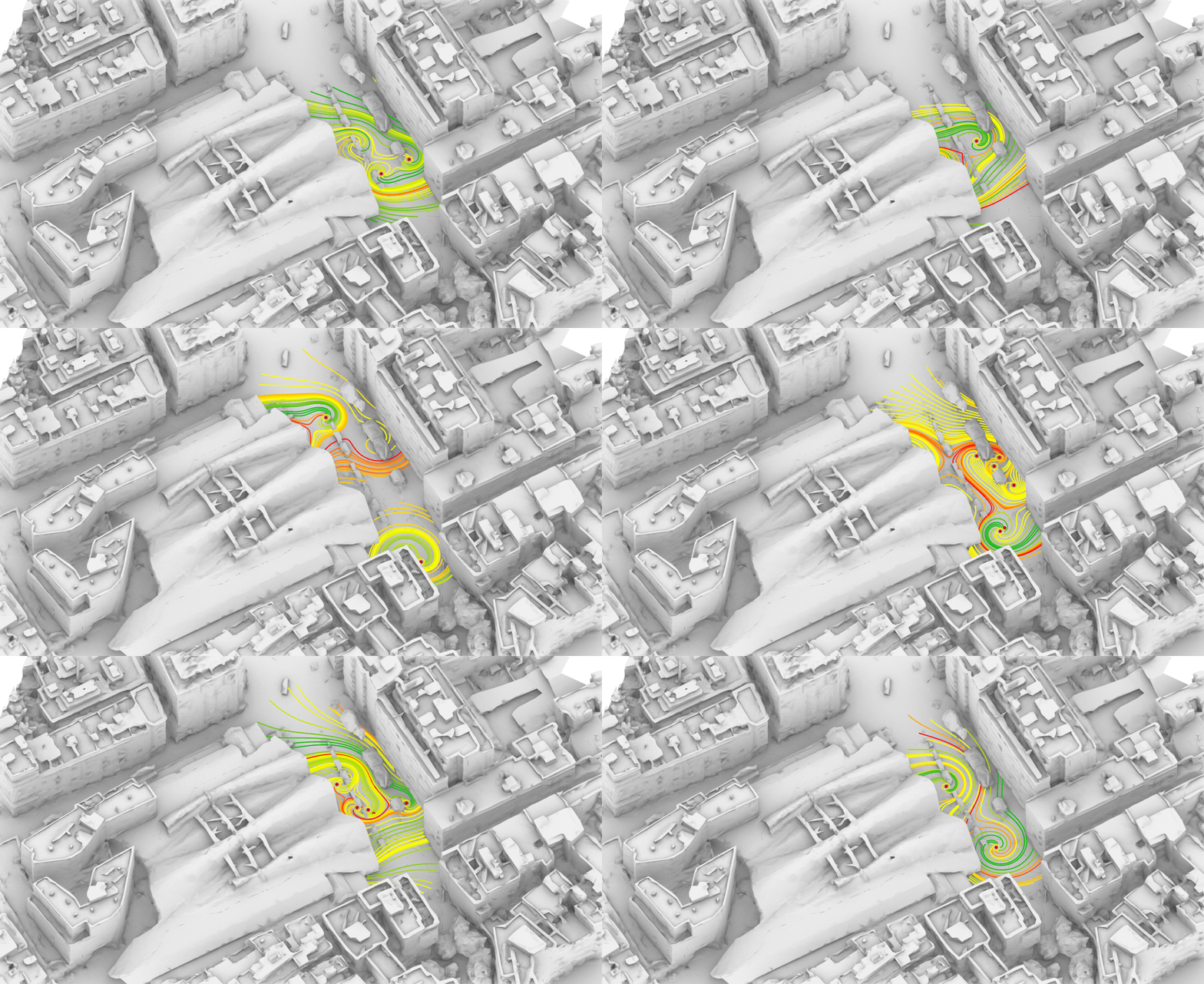
mercat de santa caterina_magnetic map
The proposal is to create various public spots and new routes after analyzing the urban spaces in the Barcelona city as the number of pedestrians and cyclists significantly increase in comparison to the car users during the time of pandemic.